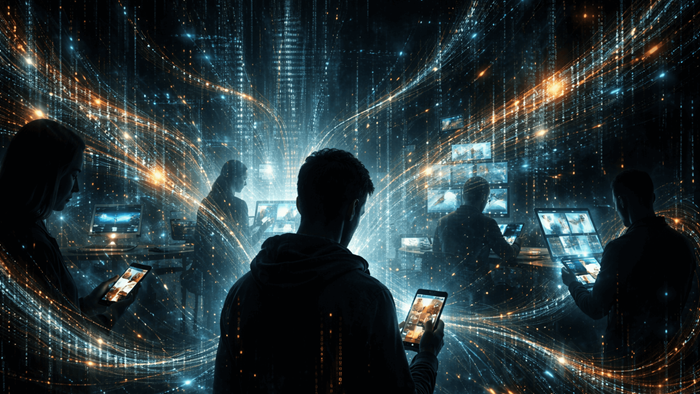
 How unseen algorithms quietly influence what we buy, watch, believe, and become ↗
Living Inside the Machine
Every day, billions of people wake up and make what feel like independent choices: what to wear, what news to read, which route to take to work, what movie to watch, and even who to date. Yet beneath these seemingly personal decisions lies an invisible architecture of algorithms— mathematical instructions that filter, rank, predict, and persuade.
Algorithms are no longer confined to research labs or technical manuals. They are embedded into the fabric of daily life, shaping experiences in ways that are subtle, powerful, and often completely unnoticed. According to industry estimates, over 90% of digital content consumed today is algorithmically curated in some form, whether through recommendation engines, ranking systems, or personalization models.
This article explores how these hidden systems operate, the psychological and economic forces behind them, and why understanding their influence has become one of the defining challenges of the digital age.
What Algorithms Really Are (And What They Are Not)
At their core, algorithms are step-by-step instructions designed to solve problems or make decisions. In the modern digital ecosystem, they are fueled by massive datasets and optimized using machine learning techniques that allow them to adapt over time.
Contrary to popular belief, algorithms are not neutral. They reflect the priorities, incentives, and assumptions of the organizations that deploy them. When an algorithm decides which posts rise to the top of a social feed or which product appears first in a search result, it is making a value-laden decision—even if that decision is expressed in code.
- Algorithms prioritize efficiency, not fairness, unless explicitly designed otherwise
- They learn from historical data, inheriting past biases
- They optimize for measurable outcomes like clicks, watch time, or conversions
- They often operate as “black boxes,” even to their creators
In practice, algorithms act less like tools and more like invisible gatekeepers, quietly deciding what deserves attention and what fades into obscurity.
From Browsing to Buying: Algorithms in Commerce
Online shopping is one of the most mature examples of algorithmic influence. E-commerce platforms analyze thousands of data points per user, including browsing behavior, purchase history, time spent viewing products, and even cursor movement.
Research shows that recommendation systems account for approximately:
- 35% of total sales on major e-commerce platforms
- Up to 75% of what users watch on streaming-based retail platforms
- Over 60% of product discovery for repeat customers
These systems are designed to reduce friction, but they also shape consumer desire. By placing certain products front and center, algorithms subtly redefine what feels “popular,” “necessary,” or “trending.”
Dynamic pricing algorithms further complicate the picture, adjusting prices in real time based on demand, location, device type, and even perceived willingness to pay. Two users can see entirely different prices for the same product without ever realizing it.
The Algorithmic Feed: Engineering Attention
Social media platforms are powered by algorithms ↗ optimized for one primary goal: attention. Every like, share, pause, or scroll is recorded and fed back into models that predict what will keep users engaged for longer periods of time.
Studies estimate that the average person spends over 2.5 hours per day on social platforms, with algorithmic ranking systems determining the vast majority of what they see. Chronological feeds have largely disappeared, replaced by predictive curation.
- Content that triggers strong emotional reactions is prioritized
- Engagement metrics outweigh informational accuracy
- Echo chambers form through repeated reinforcement
- Virality becomes algorithmically engineered, not organic
The result is a feedback loop where attention shapes the algorithm, and the algorithm shapes attention—often amplifying outrage, polarization, and misinformation in the process.
Maps, Movement, and Algorithmic Geography
Navigation apps have transformed how people experience physical space. Instead of learning routes through exploration, users increasingly rely on algorithmic directions optimized for speed, traffic patterns, and historical data.
While these systems save time—often reducing commute durations by 10–20%—they also reshape cities. Entire neighborhoods experience increased traffic, while others become digitally invisible.
Algorithms decide:
- Which routes are considered “optimal”
- Which businesses appear along the way
- Which areas feel accessible or distant
- How emergency services and logistics are deployed
In this way, code does not just map the world—it actively reorganizes it.
What You Watch Next Is Rarely an Accident
Streaming platforms rely heavily on recommendation algorithms to keep viewers engaged. Autoplay features, personalized thumbnails, and curated rows are all driven by predictive models designed to minimize decision fatigue.
Industry data suggests that over 80% of streamed content is discovered through algorithmic recommendations rather than direct search. This means cultural exposure itself is being mediated by code.
- Genres are dynamically redefined per user
- Artwork changes based on viewing history
- Niche content is surfaced selectively
- Completion rates influence future production decisions
Algorithms do not just reflect taste—they actively shape it, influencing which stories get told and which voices are amplified.
Data-Driven Persuasion: The Psychology of Prediction
Modern algorithms operate at the intersection of data science and behavioral psychology. By analyzing patterns at scale, they can predict not only what users want, but when they are most vulnerable to persuasion.
Micro-targeting techniques allow messages to be tailored based on mood, habits, and inferred personality traits. In advertising, this has led to conversion rate increases of 20–40% compared to generic messaging.
Key persuasive mechanisms include:
- Scarcity cues and urgency signals
- Social proof and popularity indicators
- Personalized framing of identical information
- Repetition through varied formats
The line between assistance and manipulation becomes increasingly blurred as algorithms grow more sophisticated.
The Ethical Blind Spots of Invisible Code
As algorithmic systems expand their influence, concerns about transparency, accountability, and consent have intensified. Most users have little understanding of how decisions are being made on their behalf—or how to challenge them.
Common ethical risks include:
- Bias amplification in hiring, lending, and policing systems
- Lack of explainability in automated decisions
- Asymmetric power between platforms and users
- Data extraction without meaningful consent
Regulatory efforts are emerging worldwide, but the pace of technological change often outstrips legal frameworks.
The Future: Coexisting With Our Algorithms
Algorithms are not going away. If anything, their influence will deepen as artificial intelligence systems become more autonomous and embedded into physical infrastructure, healthcare, education, and governance.
The challenge ahead is not to eliminate algorithms, but to design systems that align with human values, promote transparency, and preserve meaningful choice.
- Explainable AI models for critical decisions
- User-controlled personalization settings
- Auditable and accountable algorithmic systems
- Digital literacy as a core life skill
Understanding how invisible code shapes real decisions is the first step toward reclaiming agency in an algorithmic world.
Frequently Asked Questions
What is an algorithm in simple terms?
An algorithm is a set of instructions a computer follows to make decisions or solve problems. In everyday digital life, algorithms sort information, predict preferences, and automate choices based on data patterns rather than human judgment.
How do algorithms influence my daily decisions?
Algorithms influence what products you see, which posts appear in your social feed, the routes suggested by navigation apps, and the shows recommended to you. While they do not force decisions, they shape the options presented, making some choices far more likely than others.
Are algorithms intentionally manipulating people?
Most algorithms are designed to optimize specific goals such as engagement, efficiency, or profit. Manipulation can occur as a side effect when systems prioritize attention or conversions over well-being, accuracy, or autonomy—even if manipulation was not the original intent.
Why do algorithms sometimes feel biased or unfair?
Algorithms learn from historical data, which often contains social, economic, and cultural biases. If those biases are not actively addressed during design and training, the algorithm can amplify existing inequalities rather than correct them.
Can I opt out of algorithmic influence?
Complete opt-out is difficult in modern digital environments, but users can reduce influence by adjusting personalization settings, limiting data sharing, diversifying information sources, and consciously questioning automated recommendations.
Do algorithms know me better than I know myself?
Algorithms can be highly effective at predicting short-term behavior based on past actions, but they lack true understanding, context, and human values. Their predictions are probabilistic, not insightful, and can fail when circumstances or priorities change.
How can society make algorithms more transparent?
Transparency can be improved through explainable AI models, clearer disclosure of how data is used, independent audits, stronger regulation, and digital literacy education that empowers users to understand algorithmic systems.
Will algorithms continue to shape future generations?
Yes. As algorithms become embedded in education, healthcare, employment, and governance, their influence will expand. The long-term impact will depend on how responsibly these systems are designed, regulated, and understood by the people who live with them.
Algorithms have become the invisible scaffolding of modern life, quietly guiding choices that once felt entirely personal. From the products suggested at the exact moment of hesitation to the news stories ranked first during moments of uncertainty, these systems operate continuously beneath the surface of awareness. Their power does not lie in overt control, but in subtle influence—reshaping attention, narrowing options, and reinforcing patterns of behavior over time. As society becomes increasingly data-driven, the challenge is no longer whether algorithms affect us, but whether we understand their role well enough to question them. Transparency, literacy, and ethical design are essential not to resist technology, but to coexist with it consciously. In recognizing the hidden architecture behind our decisions, we reclaim the ability to pause, reflect, and choose with intent in a world optimized for prediction.
More at Statuslink ↗